The Alps ask something of the body that few other places do. Altitude changes how you breathe. Cold changes how you hold yourself. A week here, however it's spent, moves through the body differently to a week anywhere else, and that's exactly what makes it worth meeting properly, rather than simply pushing through.
An Alpine winter holds more than one kind of experience. For some, it's built around the mountain, first lift to last. For others, it's a spa day built into the stillness of altitude itself, a different cadence entirely. A week here can be spent on snow, in stillness, or both, skiing or not.
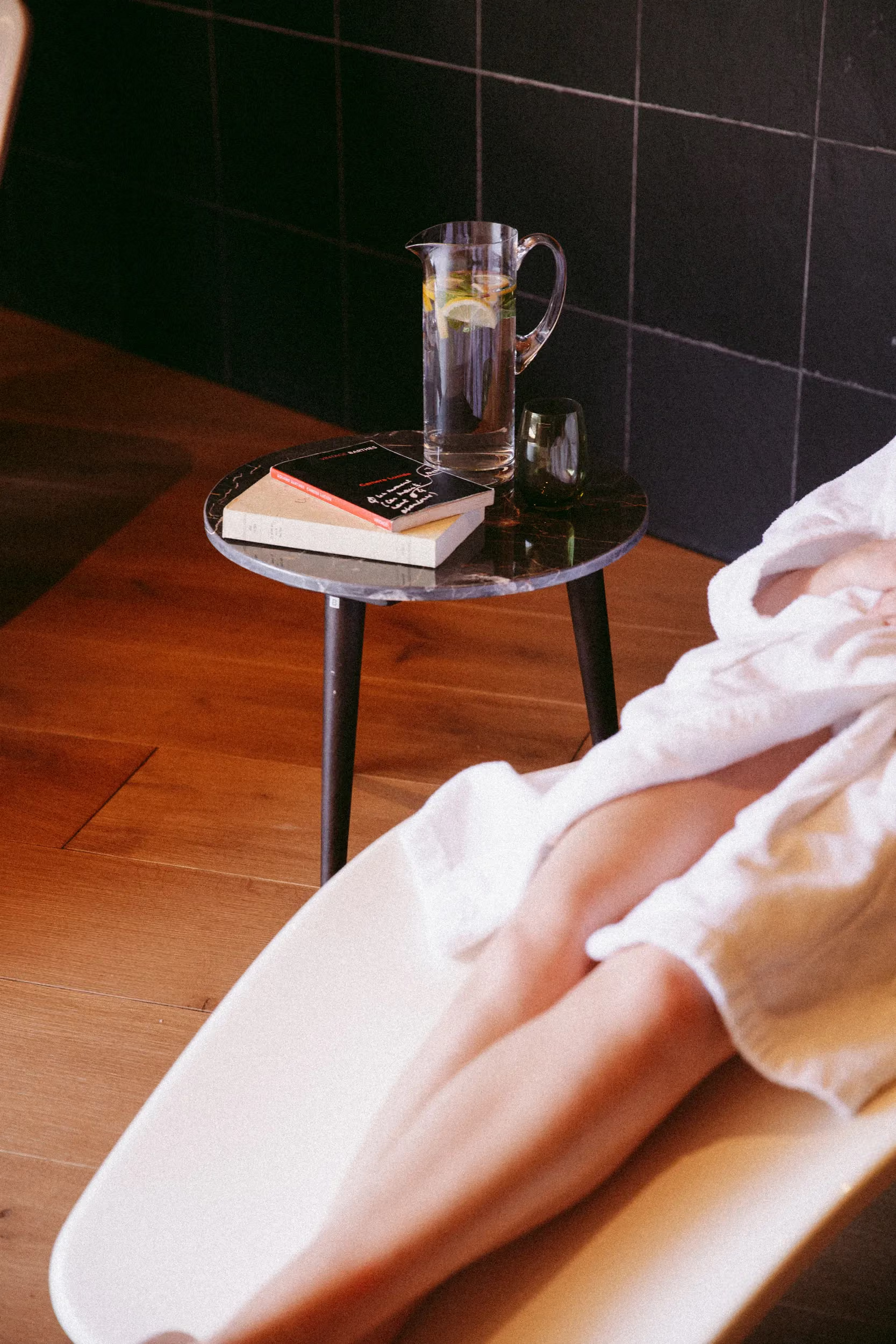
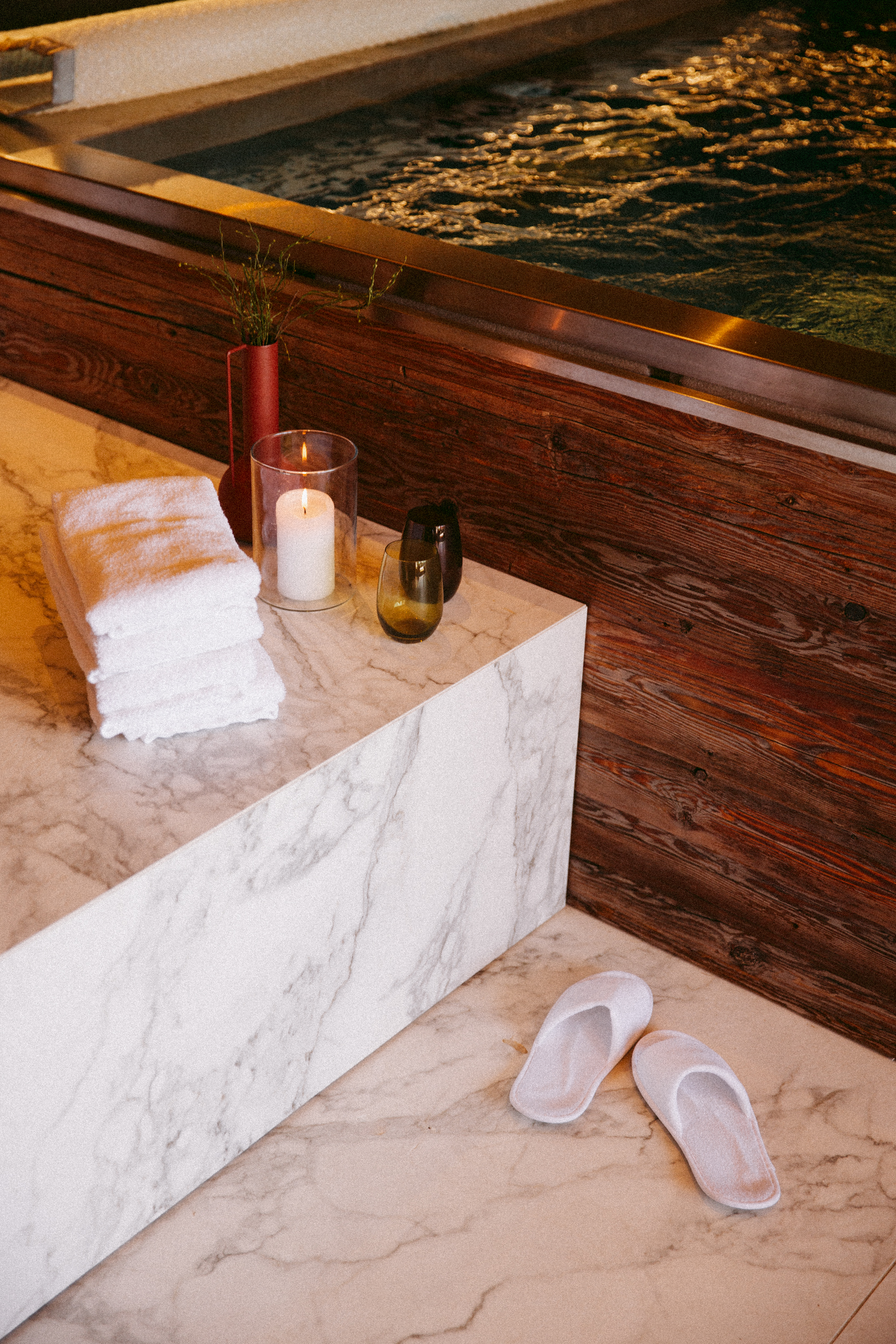
A private journey through heat: two traditions, two different kinds of warmth. The dry, enveloping heat of a sauna, and the softer, humid warmth of steam, each working on the body in its own way. Legs that have spent the day bracing through turns find their warmth again, muscle by muscle. Restoration here isn't a single moment. It's a slow return.
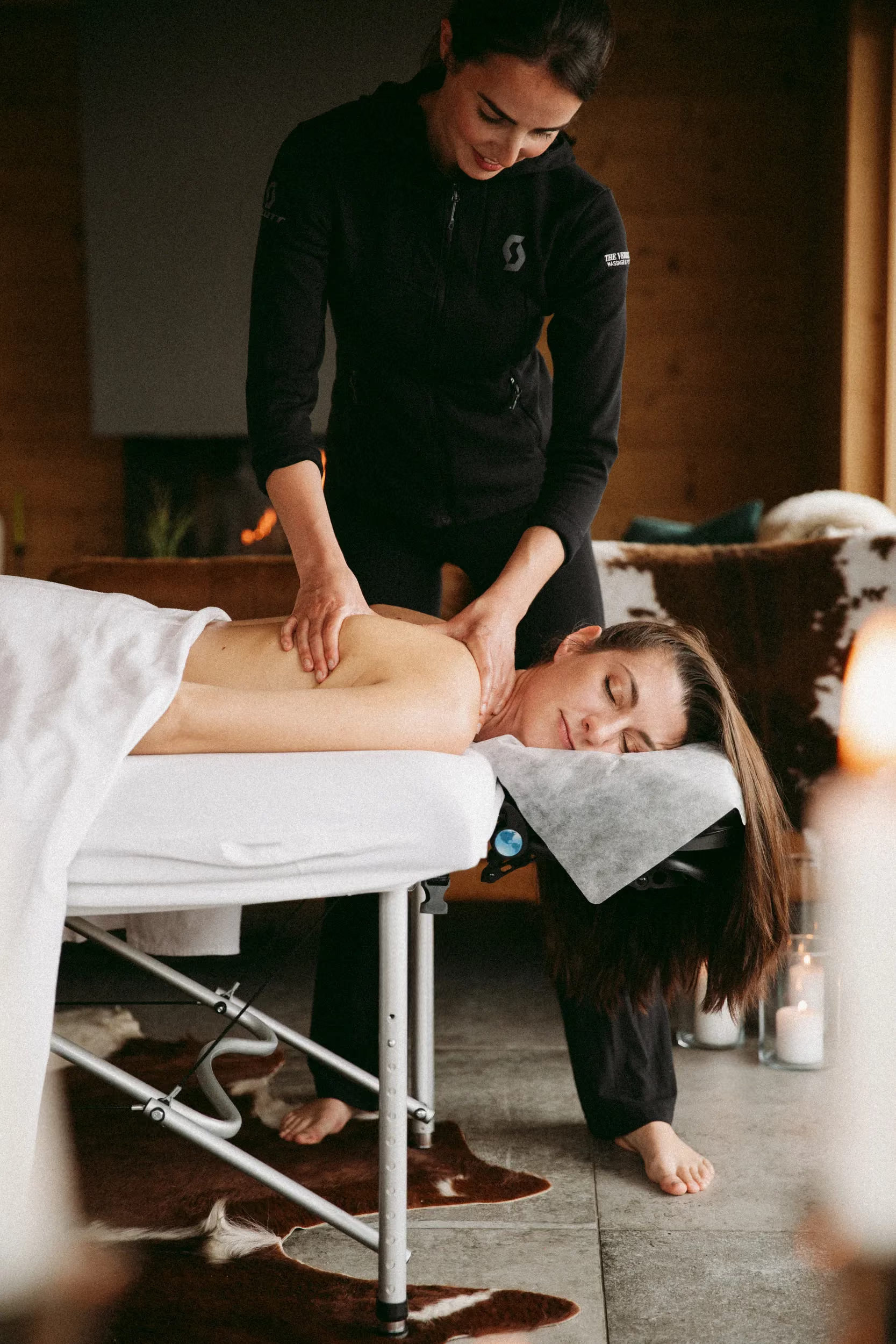
A day of skiing holds tension in places you don't notice until it's released. Touch begins that work. Some days call for pressure, deep and deliberate, finding what the mountain asked of the legs, the shoulders, the lower back, the small muscles that spend all day compensating without ever being noticed. Others arrive with no skiing in them at all: a day set aside entirely for rest, where the work is ease rather than repair. Either way, it happens here, in the privacy of the chalet.
Skiing asks the legs to work in a way almost nothing else does: holding and lengthening through every turn rather than simply pushing off. Reformer work answers that directly, one leg steadied at a time, balance returned to a body that's spent the week working harder on one side than the other. Not preparation for the mountain, and not recovery from it. Something closer to correction, before the body is asked to do it all again.
Above 1,500 metres, the air itself changes, thinner, asking more of every breath than it would at sea level. Yoga meets that directly, slow and deliberate breath training the body to draw more from each inhale. Some sessions move, strength drawn slowly through the body, undoing the shape a day on skis presses it into. Others ask only for breath, a stillness that belongs to the holiday as much as any run down the mountain does.
The mountain doesn't keep score of how the week was spent. Whichever shape it takes, on snow or in stillness, it only asks to be met with intention, and that's arranged as simply as a word to your concierge.
Written by Emelia Risi, Creative Marketing at Armadillo Chalets, based in Verbier.