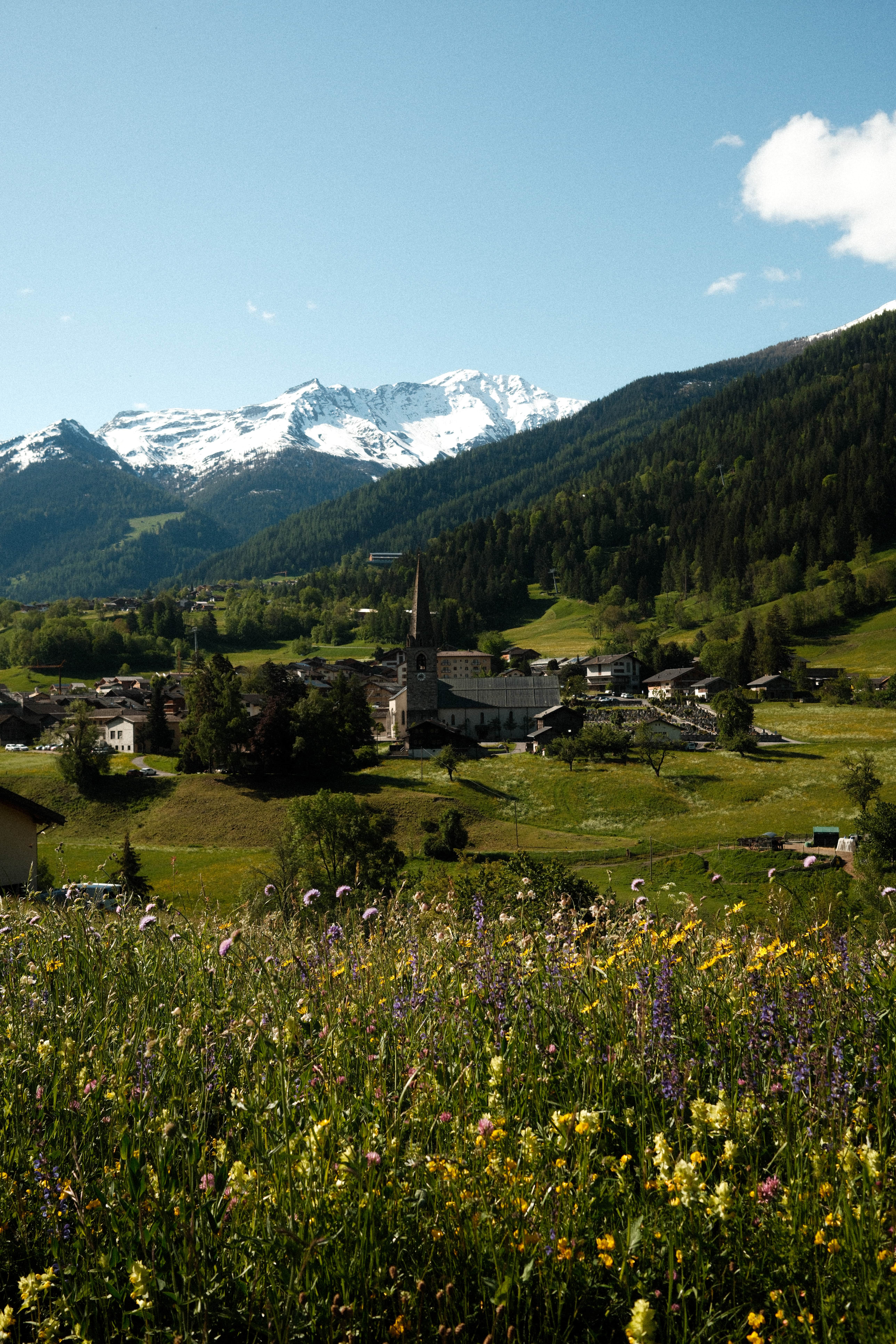
The first thing you notice is the size of her. Standing in a field thick with alpine flowers, dark coat against the green, she looks less like livestock and more like something that owns the place. Mistake one for a bull and you wouldn't be the first.
But spend five minutes with a local farmer and the word that comes up most isn't strength. It's her name. Daisy. Coco Chanel. Diva. These aren't labels for the spreadsheet, they're names given the way you'd name a daughter. Many were born on the same farm as their mothers and grandmothers. Families here can trace a cow's lineage the way other families trace their own, and ask a farmer which is his best girl and you'll get a story before you get a fact.
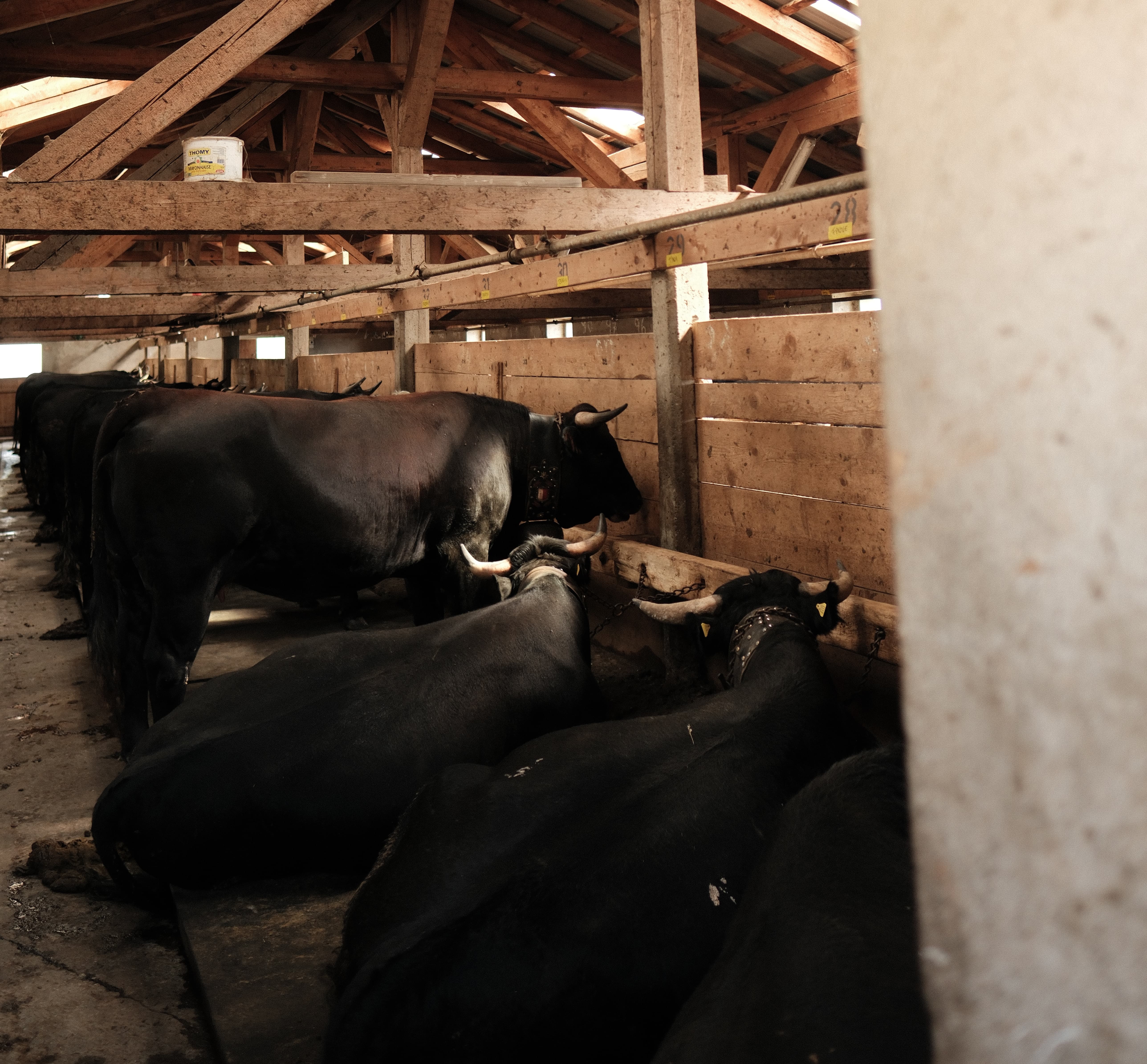
After a winter sheltered in the étable, these cows come out restless. When the doors open in spring, they find each other quickly, head to head, horns locked, neither giving an inch. For a moment it looks like chaos. It isn't. This is how the herd decides who leads for the summer ahead, on shared high pastures where someone has to go first, and it's entirely their own idea. Nobody trains a Hérens cow to do this. The moment she's given room, she does it herself, because that's who she is.
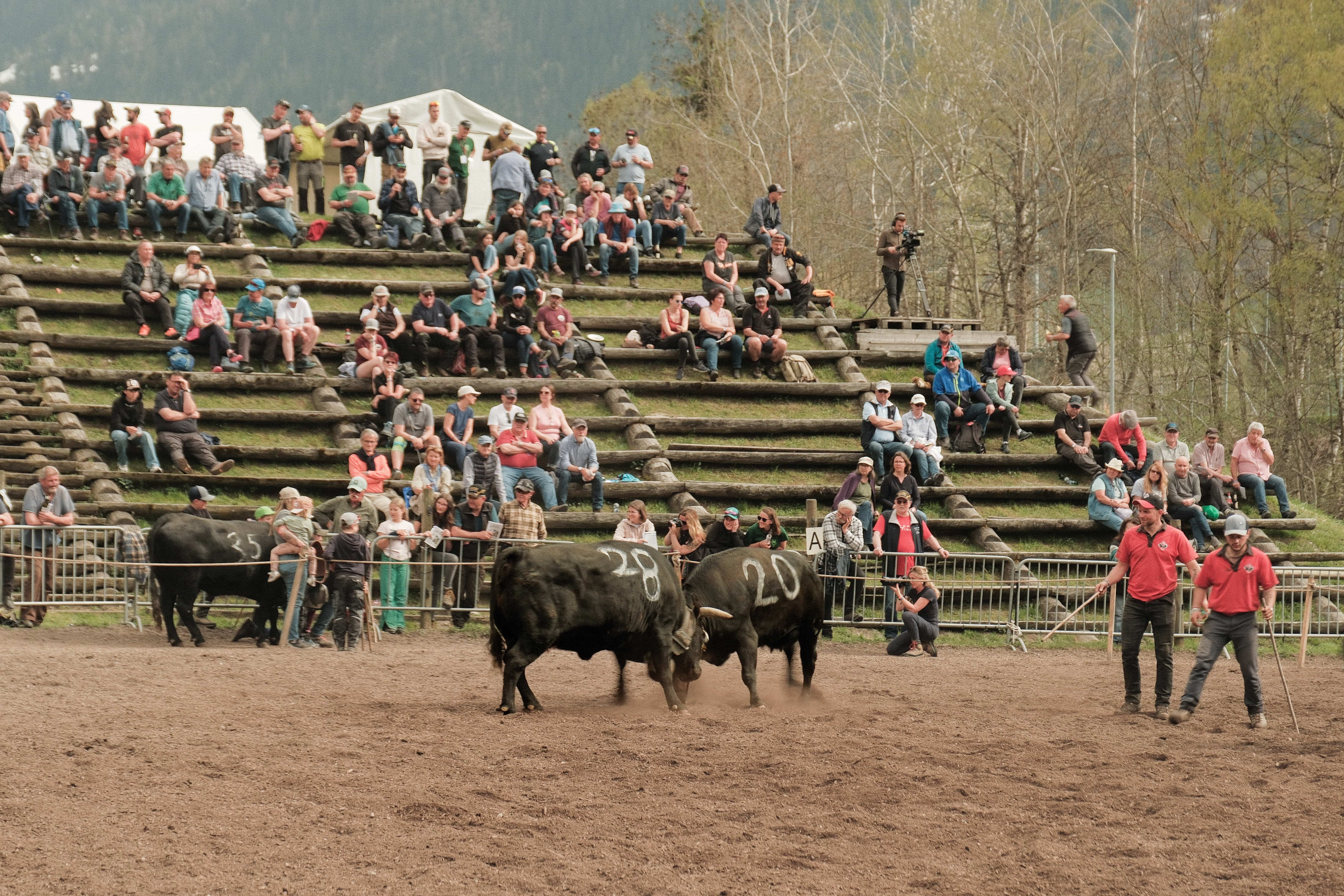
In April, this becomes a public affair, and the arena at Le Châble, just below Verbier, is where to feel it. Get there early and the valley is already arriving: farming families in boots and jackets, market stalls setting up, glasses of wine being poured well before midday, and the smell of raclette starting to drift across the crowd before the first match has even begun. The line-up is the whole valley's herd, really, some cows making their debut, young and unsure of themselves, others old hands who've done this for years and clearly know exactly what's expected of them.
Inside, two cows square up, foreheads pressed together, both pushing, neither backing down. The crowd leans in. Farmers call out names from the barriers, the same names you'd hear shouted at any family occasion, and when one cow finally turns away, there's a ripple of noise, half groan, half cheer, depending on whose girl just lost. The winner gets her moment: a sonnette, a bell on a decorated strap, fastened around her neck as she's led around the ring, head held impossibly high, as if she already knew.
What's easy to miss, amid all this, is where the rest of the year leads. These same herds, grazing the same high alpages all summer, produce the milk that becomes Raclette du Valais and tomme, much of it made into cheese at fromageries right here in the valley, occasionally taking home medals of their own. It's this milk, and these cows, that our chefs work with when they put together a chalet raclette evening or a board of local cheese after a day on the mountain. Knowing the field it came from, and the cow that grazed it, changes the way it tastes.
It's worth being there for, not as a spectacle, but as a glimpse of something genuinely rare: a place where the oldest customs are still simply how life works, and where pride in an animal runs as deep as pride in family, because here, they amount to much the same thing.