I've lived in Verbier for 8 years now, 15 in the Alps altogether, and every winter I watch some version of the same conversation happen. A family decides a week isn't enough. They start asking what a full season would actually take.
A few winters ago it was a family of five. January to the end of March, with one of the children starting at Verbier International School for the winter term. This is their story, the way I've watched it unfold since.
The family's friends asked the obvious question before they'd even booked anything:
What happens to the jobs?
What happens to school?
Three months is a long time to be away from either. It turns out neither of those things had to go anywhere. The jobs came to Verbier with them. So did school. What changed was where the two of them happened.
Building that season meant none of it was left to chance. The school place was secured the previous September, months before the intake list closed. The connection strong enough to carry back-to-back video calls was tested before they arrived, not discovered halfway through week one.
The eldest child went to the international school, the place secured that September. Alongside school: a ski instructor, twice a week, rain or shine, the same face each time, not whoever happened to be free that morning. There was also a piano teacher, a tennis coach, and French lessons twice a week, though the classroom work counted for less than the daily exposure: on the school run, at the bakery, from other children at the lift queue.
The coordination itself stayed off the parents' desk entirely. They didn't manage rotas, chase a piano teacher, or work out which instructor suited their child, not just which one looked good on paper. The network of teachers, coaches and instructors already exists in Verbier; our job was pairing the right people to this particular child and making the calendar work over three months, not three days. Their job was being a family: showing up for dinner, and having the headspace left to ask how everyone's day had gone.
A season makes that possible: less time spent coordinating, more time spent present with the people you came here for.
The chalet you want for a week isn't the chalet you want for three months.
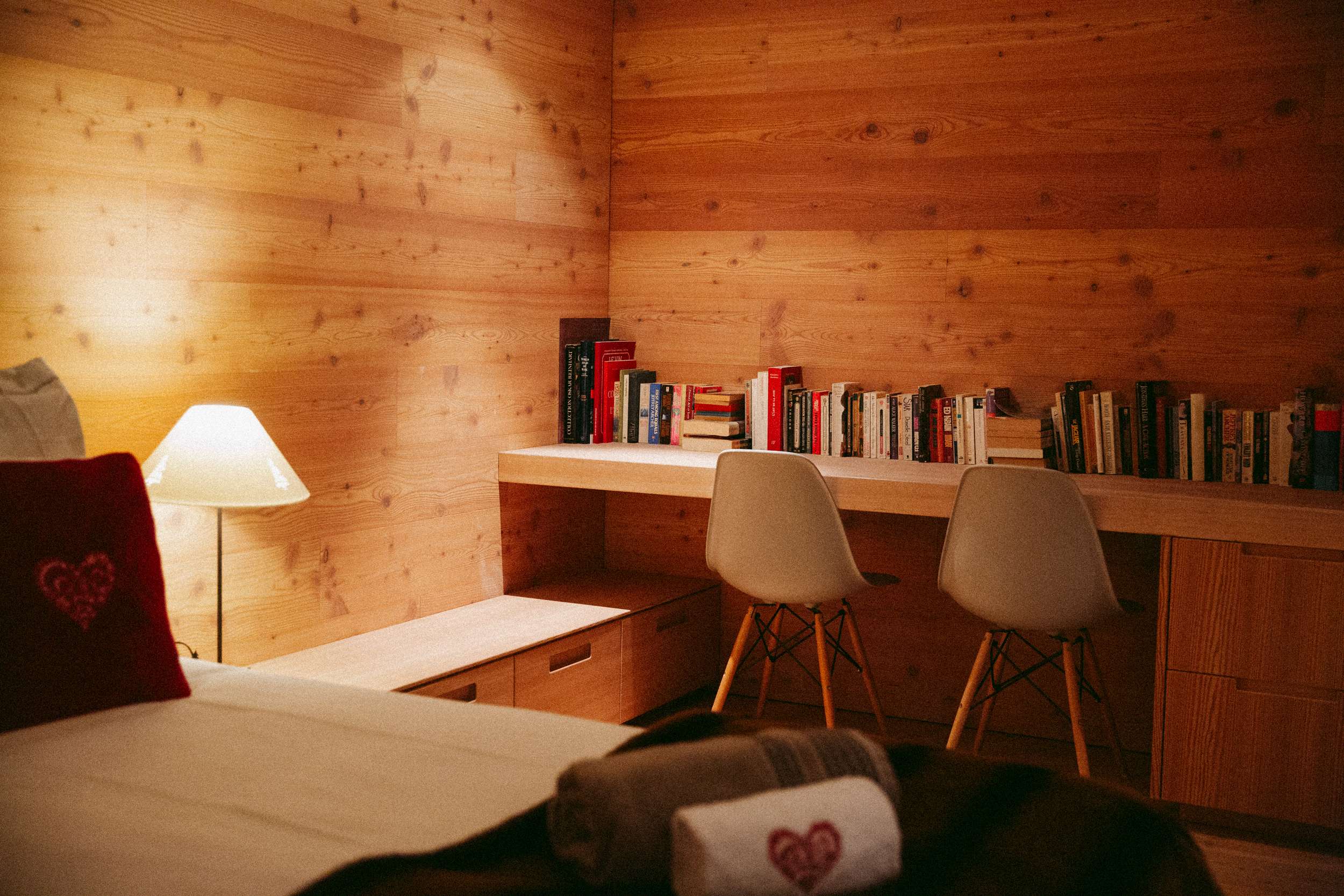
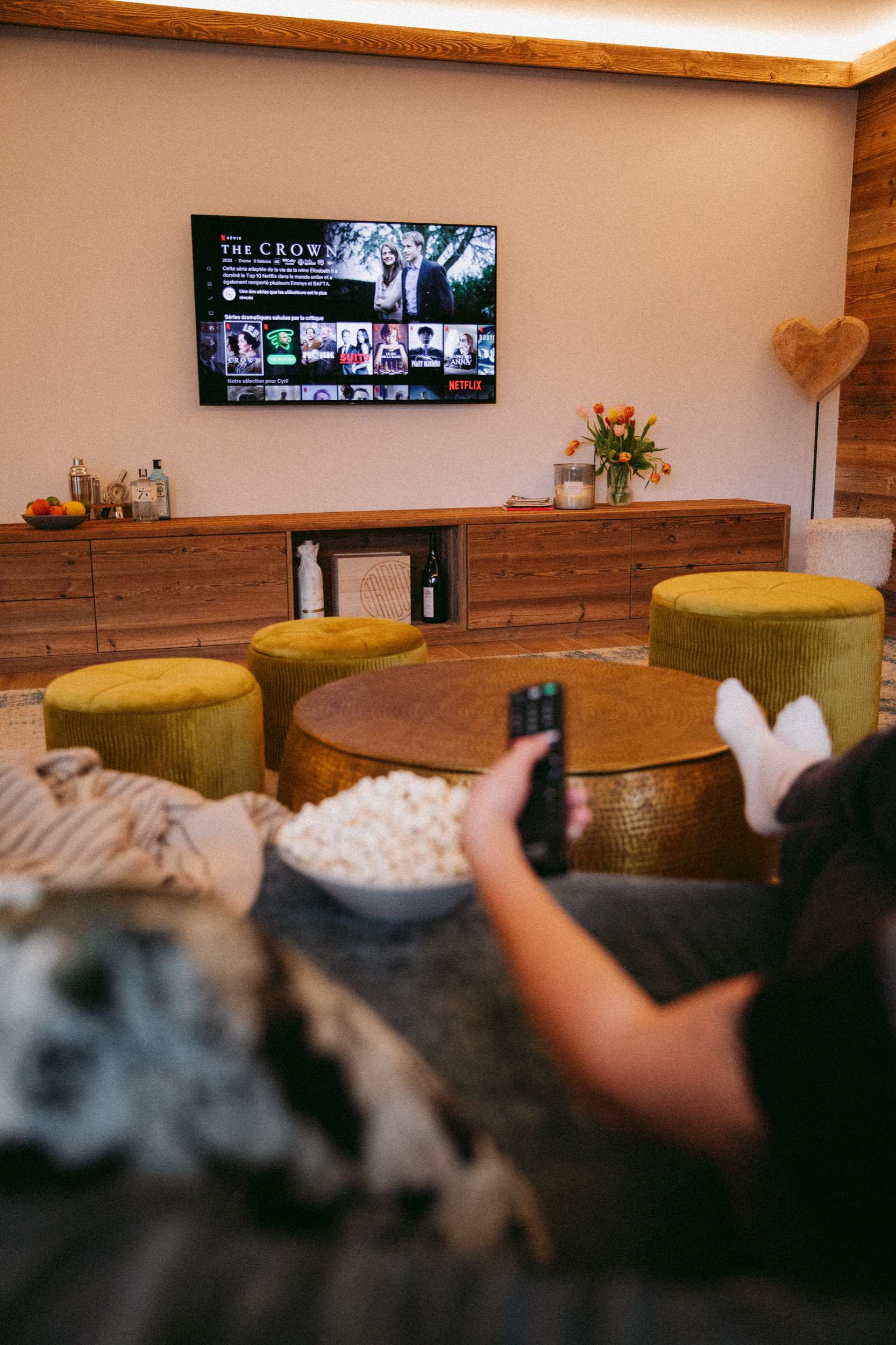
Think about how the space works on an ordinary Tuesday, not a celebratory Saturday. Where the adults work. Where a child does homework and practises piano without disrupting the rest of the household. How the kitchen manages feeding a family every day rather than catering one big dinner. Whether there's room to come back off the mountain, drop everything, and not be on top of each other by week three.
Connectivity counts for more than almost anything if you're working from there. The useful question isn't "is there WiFi." It's whether the connection will carry a two-hour video call while someone else streams and a child logs into school. Those are different questions, and only one of them tells you anything.
Location plays into the daily routine too: the school run, the walk to the lift, how close you are to what you'll use every day. A chalet that's perfect for a week can wear you down over a season if the daily logistics work against you.
The question every couple asks without quite saying it out loud: will the parents have a season too, or just manage everyone else's?
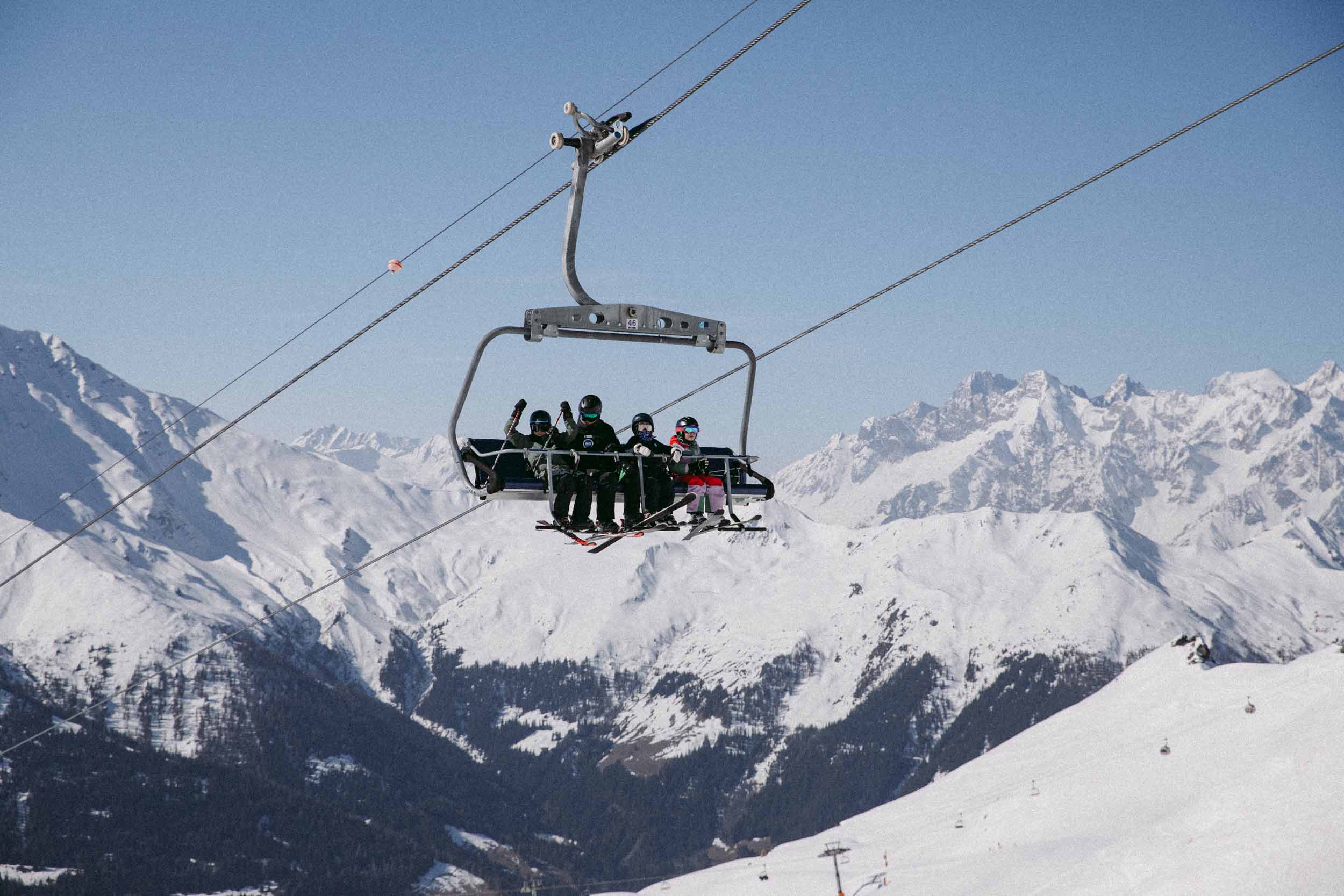
While the eldest was at school, and out with an instructor, the parents had their days. A Tuesday morning on the mountain in January looks nothing like a Saturday: quiet lifts, first tracks still there from the day before, no queue at the top to break the rhythm of a run. The skiing and the touring happened then, with time to train, not just ski hard for a week and call it a holiday. It's easy to forget, when you're the one organising a family holiday, that the organising is the thing that wears you out. Take that away for three months and what's left is closer to a relationship than a rota: the children stretched and looked after, and the adults free to be two people again, not drivers and schedulers.
This is where the social side comes into it too. A season is long enough that you want a life beyond the four walls of the chalet, and Verbier has one if you know where to find it: other families doing the same thing, dinners that don't need organising, a few months of being part of something rather than passing through. It's one of the reasons families who try a season end up wanting another.
The extras are what turn three months into something a child remembers.
Skiing every week with the same instructor is a different thing entirely from a week's lesson block booked once a year. A week gets a child comfortable. A season gets them somewhere else: still finding their feet on a blue run in December, then, by March, following a parent down a red without being asked twice. Piano and tennis carrying on instead of pausing for the winter. French lessons layered onto daily immersion, not left to fade between visits. Fitness and touring for the adults, through Mountain Air and the guiding available on the mountain.
The point is continuity. A week gives a child a taste. A season changes what a child can do, not just what they remember: in skiing, in language, in confidence. Parents tell us, afterwards, that this is the part that mattered most, and no single week can buy it, however good the week is.
This particular family came back the following winter. Then again the year after.
They're now weighing a third season. By the second one, they were talking seriously about buying instead of renting. Eventually they bought a property; our team looks after it through the summer while they're away, so the house is ready when they return.
They hadn't planned any of it when they first came for three months, which is rather the point. A season is the low-stakes way to find out whether Verbier is right for a family, before anyone commits to owning anything.
Some families do it once and love it for what it was. Some do it every winter. Some, like this one, find the season was the beginning of something larger.
Start with the questions, not the chalet.
How old are the children, and what do they need to keep going while they're here. What does a working day have to look like for the adults. What does each person want from the mountain. When does the school place need to be secured by. Those answers decide everything that follows. They're the conversation we have with every family before a single property gets discussed.
If a winter in Verbier has been on your mind, here's the useful thing to know: the families who do it well start the conversation in autumn, for the winter after. Sooner helps, but it's rarely too late to ask.
Get in touch when you're ready to talk it through.
Written by James Carroll, Managing Director at Armadillo Chalets, based in Verbier, with 15 years living across the Swiss, French, and Austrian Alps.